
Toyota Yaris: Headlight Assembly / Components
COMPONENTS
ILLUSTRATION
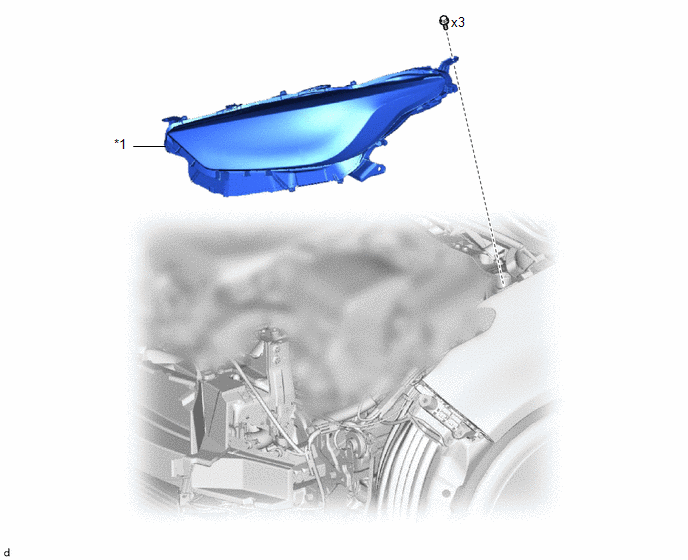
| *1 | HEADLIGHT ASSEMBLY | - | - |
ILLUSTRATION
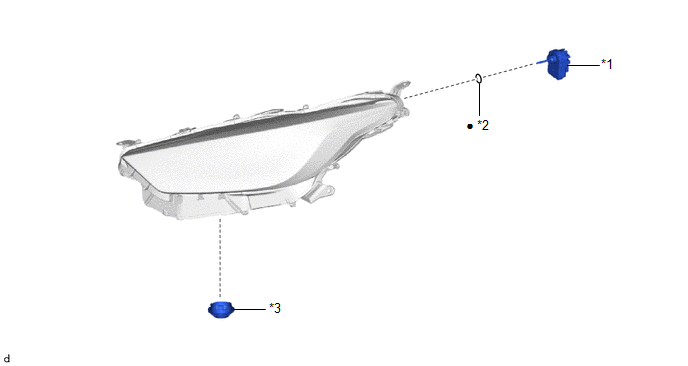
| *1 | HEADLIGHT LEVELING MOTOR | *2 | HEADLIGHT LEVELING MOTOR BASE PACKING |
| *3 | NO. 1 HEADLIGHT COVER | - | - |
| ● | Non-reusable part | - | - |
ILLUSTRATION
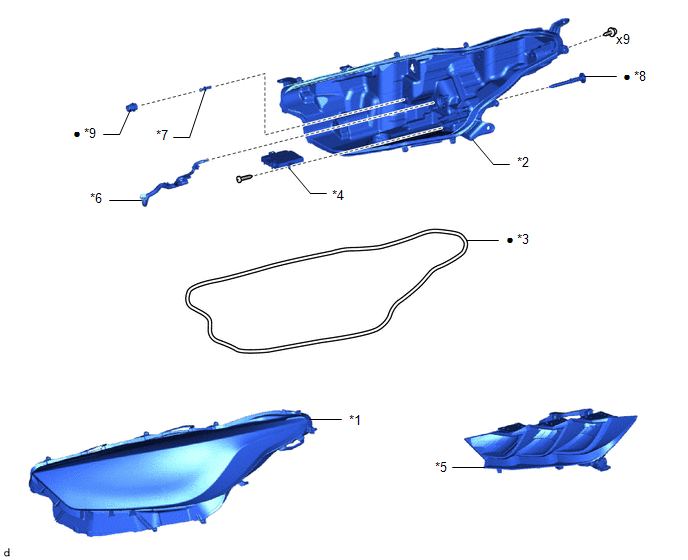
| *1 | HEADLIGHT LENS SUB-ASSEMBLY | *2 | HEADLIGHT HOUSING SUB-ASSEMBLY |
| *3 | HEADLIGHT LENS GASKET | *4 | LIGHT CONTROL LED ECU |
| *5 | HEADLIGHT UNIT ASSEMBLY | *6 | HEADLIGHT CORD |
| *7 | PIVOT SCREW | *8 | AIMING SCREW |
| *9 | PIVOT COLLAR | - | - |
| ● | Non-reusable part | - | - |
 Precaution
PRECAUTION NOTICE: When disassembling the headlight assembly, use static electricity countermeasures SST (desktop anti-static mat set) and observe all precautions to prevent damage to the system by electrostatic discharge (ESD)...
 Removal
REMOVAL CAUTION / NOTICE / HINT HINT:
Use the same procedure for the RH side and LH side.
The following procedure is for the LH side.
PROCEDURE 1...
Other information:
Toyota Yaris XP210 (2020-2026) Reapir and Service Manual: Components
C..
Toyota Yaris XP210 (2020-2026) Reapir and Service Manual: Engine Coolant Temperature Receiver Gauge Malfunction
DESCRIPTION In this circuit, the combination meter assembly receives engine coolant temperature signals from the ECM via CAN communication. The combination meter assembly displays an engine coolant temperature warning based on the data received from the ECM...
Categories
- Manuals Home
- Toyota Yaris Owners Manual
- Toyota Yaris Service Manual
- Key Battery Replacement
- Opening and Closing the Liftgate/Trunk Lid
- Headlights
- New on site
- Most important about car
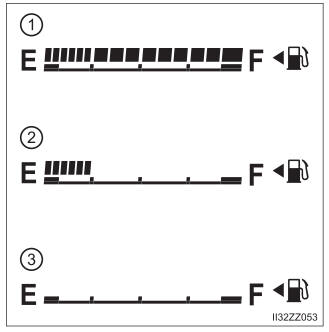
Fuel Gauge
The fuel gauge shows approximately how much fuel is remaining in the tank when the ignition is switched ON. We recommend keeping the tank over 1/4 full.

Copyright © 2026 www.toyaris4.com