
Toyota Yaris: Rear Combination Light Assembly / Disassembly
DISASSEMBLY
CAUTION / NOTICE / HINT
HINT:
- Use the same procedure for the RH and LH sides.
- The procedure listed below is for the LH side.
PROCEDURE
1. REMOVE REAR TURN SIGNAL LIGHT LED
(a) Remove the rear turn signal light LED as shown in the illustration.
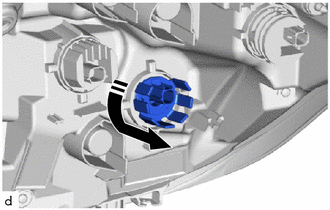
.png) | Remove in this Direction |
2. REMOVE TAIL LIGHT LED
(a) Remove the tail light LED as shown in the illustration.
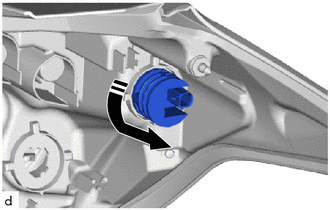
|
| Remove in this Direction |
3. REMOVE STOP LIGHT LED
(a) Remove the stop light LED as shown in the illustration.
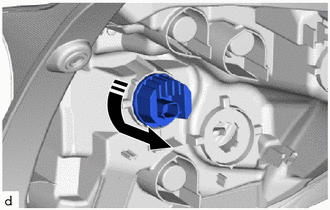
|
| Remove in this Direction |
 Removal
REMOVAL CAUTION / NOTICE / HINT HINT:
Use the same procedure for the RH and LH sides.
The procedure listed below is for the LH side.
PROCEDURE 1...
 Inspection
INSPECTION PROCEDURE 1. INSPECT STOP LIGHT LED (for LH Side) (a) Check that the stop light LED. (1) Apply auxiliary battery voltage to the stop light LED and check that the light comes on...
Other information:
Toyota Yaris XP210 (2020-2026) Owner's Manual: How to Use the Bluetooth® Audio System
Switching to Bluetooth® audio mode To listen to music or voice audio recorded to a Bluetooth® audio device, switch to the Bluetooth® audio mode to operate the audio device using the audio system control panel. Any Bluetooth® audio device must be paired to the vehicle’s Bluetooth® unit before it can be used...
Toyota Yaris XP210 (2020-2026) Reapir and Service Manual: Operation Check
OPERATION CHECK STOP AND START SYSTEM OPERATION CHECK HINT: If the cable is disconnected from the battery terminal, stop and start control is prohibited until refresh charge is completed. In this case, let the vehicle idle to complete the refresh charge...
Categories
- Manuals Home
- Toyota Yaris Owners Manual
- Toyota Yaris Service Manual
- G16e-gts (engine Mechanical)
- Battery Monitor Module General Electrical Failure (P058A01)
- Maintenance
- New on site
- Most important about car
Fuel-Filler Lid and Cap
WARNING
When removing the fuel-filler cap, loosen the cap slightly and wait for any hissing to stop, then remove it
Fuel spray is dangerous. Fuel can burn skin and eyes and cause illness if ingested. Fuel spray is released when there is pressure in the fuel tank and the fuel-filler cap is removed too quickly.

Copyright © 2026 www.toyaris4.com