
Toyota Yaris: Interior Panels / Trim / Instrument Panel Safety Pad
Toyota Yaris XP210 (2020-2026) Reapir and Service Manual / Vehicle Interior / Interior Panels / Trim / Instrument Panel Safety Pad
 Combination Switch
ComponentsCOMPONENTS ILLUSTRATION
*1 COMBINATION SWITCH ASSEMBLY - - RemovalREMOVAL PROCEDURE 1. REMOVE REAR UPPER CONSOLE PANEL SUB-ASSEMBLY Click here
2...
 Components
COMPONENTS ILLUSTRATION
*1 FRONT PILLAR GARNISH LH *2 FRONT PILLAR GARNISH RH *3 FRONT DOOR OPENING TRIM WEATHERSTRIP LH *4 FRONT DOOR OPENING TRIM WEATHERSTRIP RH *5 NO...
Other information:
Toyota Yaris XP210 (2020-2026) Owner's Manual: Driver Air Bag
The driver’s air bag is mounted in the steering wheel. When air bag crash sensors detect a frontal impact of greater than moderate force, the driver’s air bag inflates quickly helping to reduce injury mainly to the driver’s head or chest caused by directly hitting the steering wheel...
Toyota Yaris XP210 (2020-2026) Reapir and Service Manual: Inspection
INSPECTION PROCEDURE 1. INSPECT STOP LIGHT LED (for LH Side) (a) Check that the stop light LED. (1) Apply auxiliary battery voltage to the stop light LED and check that the light comes on. OK: Condition Specified Condition O109-3 (B) - Auxiliary battery positive (+) O109-1 (E) - Auxiliary battery negative (-) Stop light LED comes on If the result is not as specified, replace the stop light LED...
Categories
- Manuals Home
- Toyota Yaris Owners Manual
- Toyota Yaris Service Manual
- Adjustment
- Key Battery Replacement
- Engine & Hybrid System
- New on site
- Most important about car
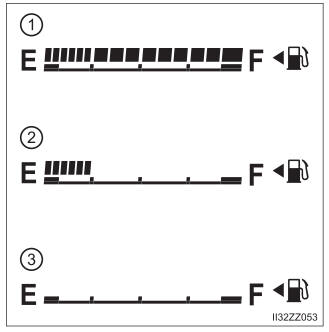
Fuel Gauge
The fuel gauge shows approximately how much fuel is remaining in the tank when the ignition is switched ON. We recommend keeping the tank over 1/4 full.

Copyright © 2026 www.toyaris4.com