
Toyota Yaris: Door Lock / Wireless Door Lock Buzzer
Toyota Yaris XP210 (2020-2026) Reapir and Service Manual / Vehicle Interior / Door Lock / Wireless Door Lock Buzzer
Components
COMPONENTS
ILLUSTRATION
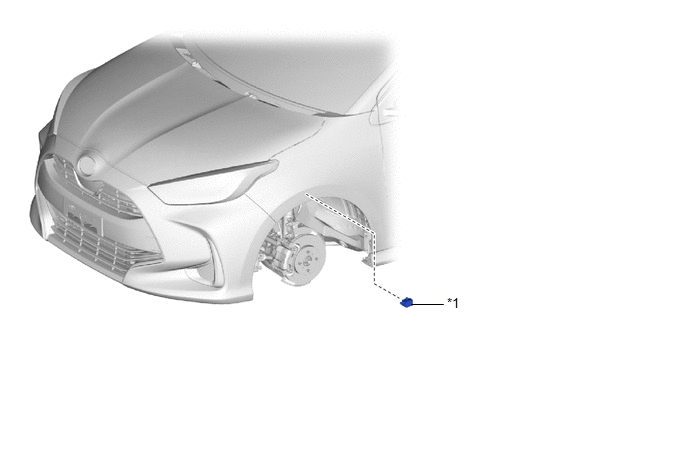
| *1 | WIRELESS DOOR LOCK BUZZER | - | - |
Removal
REMOVAL
PROCEDURE
1. REMOVE FRONT FENDER LINER LH
HINT:
Use the same procedure as for front fender liner RH.
Click here

2. REMOVE WIRELESS DOOR LOCK BUZZER
| (a) Disconnect the connector. |
|
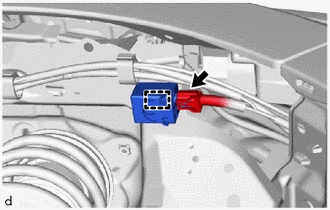
(b) Disengage the clamp to remove the wireless door lock buzzer.
Installation
INSTALLATION
PROCEDURE
1. INSTALL WIRELESS DOOR LOCK BUZZER
| (a) Engage the clamp to install the wireless door lock buzzer. |
|
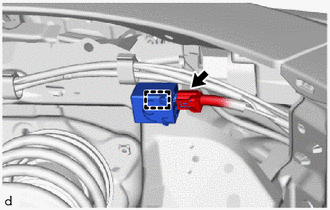
(b) Connect the connector.
2. INSTALL FRONT FENDER LINER LH
HINT:
Use the same procedure as for front fender liner RH.
Click here

 Only Back Door cannot be Opened
DESCRIPTION The main body ECU (multiplex network body ECU) receives signals from the back door opener switch assembly. Then, the main body ECU (multiplex network body ECU) activates the back door lock motor...

Other information:
Toyota Yaris XP210 (2020-2026) Reapir and Service Manual: Transmission Fluid Temperature Sensor "A" Circuit Short to Battery or Open (P071015)
DESCRIPTION Refer to DTC P071015. Click here DTC No. Detection Item DTC Detection Condition Trouble Area MIL Memory Note P071015 Transmission Fluid Temperature Sensor "A" Circuit Short to Battery or Open Manual transaxle oil temperature sensor (temperature sensor) output voltage exceeds 4...
Toyota Yaris XP210 (2020-2026) Reapir and Service Manual: Removal
REMOVAL CAUTION / NOTICE / HINT The necessary procedures (adjustment, calibration, initialization or registration) that must be performed after parts are removed, installed or replaced during the spiral cable with sensor sub-assembly removal/installation are shown below...
Categories
- Manuals Home
- Toyota Yaris Owners Manual
- Toyota Yaris Service Manual
- Immobilizer System
- Battery Monitor Module General Electrical Failure (P058A01)
- Headlights
- New on site
- Most important about car
Break-In Period
No special break-in is necessary, but a few precautions in the first 600 miles (1,000 km) may add to the performance, economy, and life of the vehicle.
Do not race the engine. Do not maintain one constant speed, either slow or fast, for a long period of time. Do not drive constantly at full-throttle or high engine rpm for extended periods of time. Avoid unnecessary hard stops. Avoid full-throttle starts.
Copyright © 2026 www.toyaris4.com