
Toyota Yaris: Engine Coolant Temperature Sensor / Installation
INSTALLATION
PROCEDURE
1. INSTALL ENGINE COOLANT TEMPERATURE SENSOR
HINT:
Perform "Inspection After Repair" after replacing the engine coolant temperature sensor.
Click here

| (a) Apply a light coat of engine coolant to the O-ring of the engine coolant temperature sensor. |
|
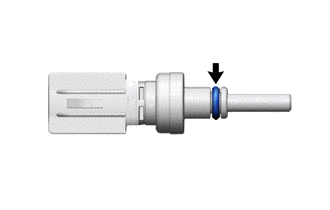
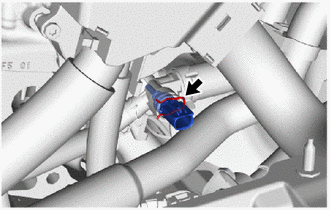
| (b) Install the engine coolant temperature sensor to the water outlet with a new clip. NOTICE:
|
|
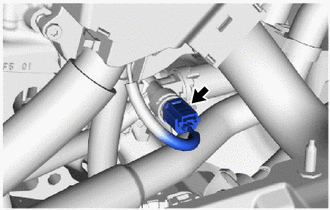
| (c) Connect the engine coolant temperature sensor connector. |
|
2. ADD ENGINE COOLANT
Click here

3. INSPECT FOR COOLANT LEAK
Click here

4. INSTALL NO. 1 ENGINE UNDER COVER ASSEMBLY
Click here

5. PERFORM INITIALIZATION
(a) Perform "Inspection After Repair" after replacing the engine coolant temperature sensor.
Click here

 Removal
REMOVAL CAUTION / NOTICE / HINT The necessary procedures (adjustment, calibration, initialization or registration) that must be performed after parts are removed and installed, or replaced during radiator assembly removal/installation are shown below...
 Ignition Coil And Spark Plug
ComponentsCOMPONENTS ILLUSTRATION
*1 SPARK PLUG *2 IGNITION COIL ASSEMBLY
N*m (kgf*cm, ft.*lbf): Specified torque - - RemovalREMOVAL CAUTION / NOTICE / HINT The necessary procedures (adjustment, calibration, initialization or registration) that must be performed after parts are removed and installed, or replaced during ignition coil assembly or spark plug removal/installation are shown below...
Other information:
Toyota Yaris XP210 (2020-2026) Reapir and Service Manual: Components
COMPONENTS ILLUSTRATION *1 LOWER INSTRUMENT PANEL FINISH PANEL *2 CENTER LOWER INSTRUMENT COVER *3 CONSOLE BOX ASSEMBLY *4 SHIFT LEVER KNOB SUB-ASSEMBLY *5 NO. 1 INSTRUMENT SIDE PANEL *6 SWITCH HOLE BASE SUB-ASSEMBLY *7 FRONT DOOR OPENING TRIM WEATHERSTRIP LH *8 COWL SIDE TRIM BOARD LH *9 FRONT DOOR SCUFF PLATE LH *10 NO...
Toyota Yaris XP210 (2020-2026) Owner's Manual: Warning Light and Transaxle Ranges
Warning Light The warning light turns on when the system has a malfunction. Refer to Warning Lights. Transaxle Ranges The shift position indicator light in the combination meter illuminates. Refer to Warning/Indicator Lights. The selector lever must be in P or N to operate the starter...
Categories
- Manuals Home
- Toyota Yaris Owners Manual
- Toyota Yaris Service Manual
- To Set Speed
- Engine Start Function When Key Battery is Dead
- Removal
- New on site
- Most important about car
Front Seat Belt Pretensioners
The front seat belt pretensioners are designed to deploy in moderate or severe frontal, near frontal collisions.
In addition, the pretensioners operate when a side collision or a rollover accident is detected. The pretensioners operate differently depending on what types of air bags are equipped. For more details about the seat belt pretensioner operation, refer to the SRS Air Bag Deployment Criteria.
